


This essay is about working with a friend to build a minimum viable product (MVP).
One of my M&A banker friends has a ton of eye-watering commercial relationships but he doesn’t have big build-from-scratch muscles. I told him the key is to play the connector role in a value chain. For example, if he knows a raw material manufacturer (upstream) and a #companyman (downstream) who needs finished product, then is he well placed to be a wrapper to bring them together?
Start from the relationship advantage
There is a famous joke about MBAs doing a startup together: two MBAs is one MBA too many. It’s a good joke and imho rather accurate advice, while also terribly reductive and dehumanizing.
Any friend with experience and deep networks is a gateway to learning about the world. It’s important to honor and complement such friends when you can.
Also the best partnerships are built on reciprocal exchange. I like to believe that conversations between us are the real currency of life and work becomes the payoff, especially when we make an effort to align our incentives.
The opportunity: Cosmetic Line in a Box
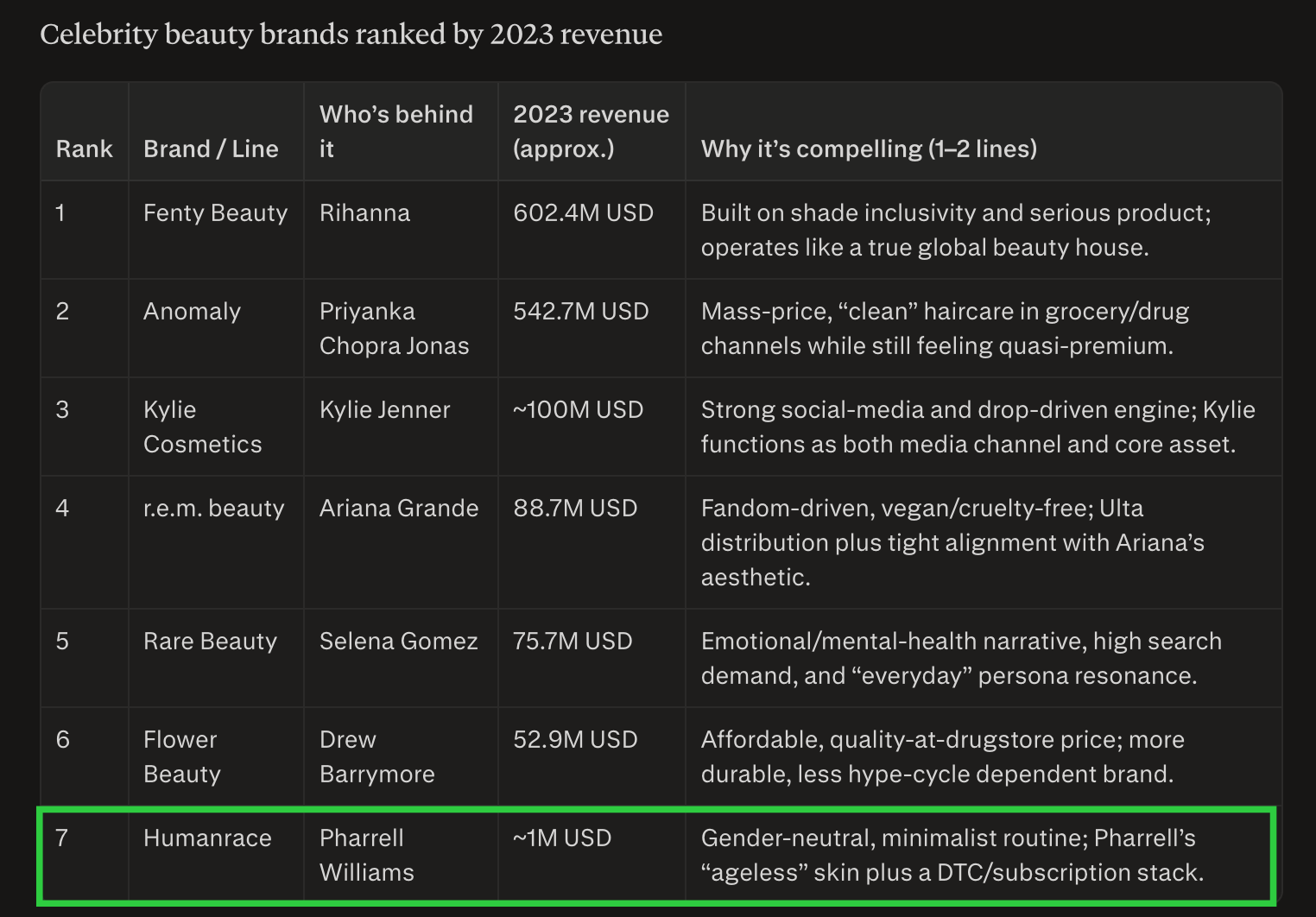
Clients need brand monetization solutions. Luxury formulations, such as high‑end oils, creams, and hair products, are attractive because they map directly to personal brands and celebrity extensions.
The margins and perceived value are high.
My friend knows a manufacturer
Rather than building a full manufacturing or distribution stack from day one, I said he should ask his friend about materials or half-finished formulation that could be repurposed. Additionaly, is there a time of year that the factory is under-utilized?
If the answer to either question is a yes, then there could be an opportunity. And if a double yes then even better.
Over the past two years I’ve been buying domains as a way to put skin-in-the-game towards ideas I get passionate about.
I’ve found that forcing myself to spend between $6 and $200 to squat on a domain is a good way to keep my emotions in check because I get passionate about new ideas every day.
Sometimes I build a product, buy a domain in the same day and never go back to it. I’ve let a few domain names expire after one-year. Others I am building and growing. And a select few I keep renewing because I haven’t yet had time to focus on that project.
It’s a fun system for me because it gives me optionality, while also forcing me to pay for my mistakes (i.e. buying a domain and then letting it lapse).
There is only one better feeling than creating something new and sharing it with the world: seeing the world use it.
Sorry went off on a tangent there. Back to the business idea at hand.
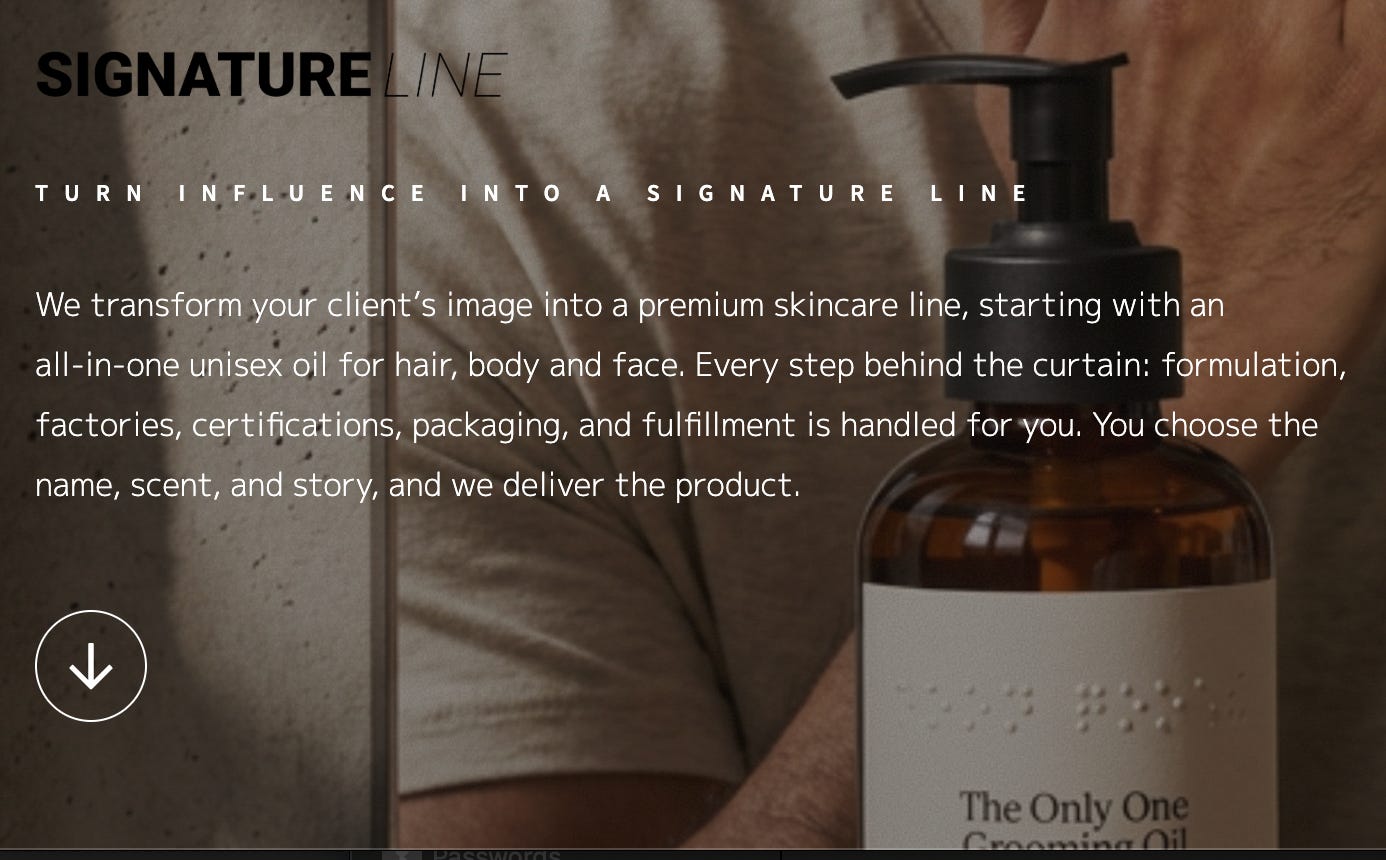
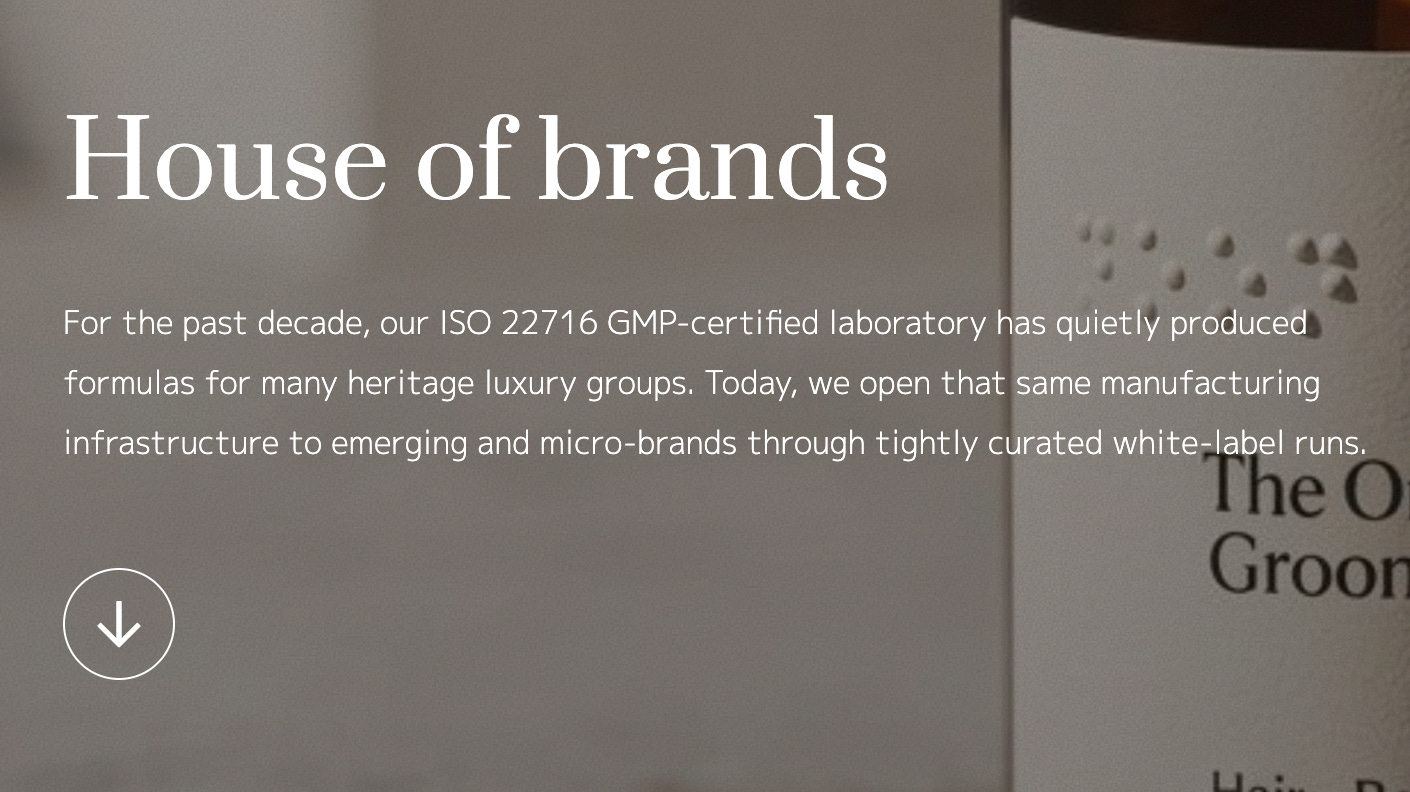
I said to my friend, let’s create a landing page to crystallize the idea and provide a conversation starter. It’s a symbolic, low‑cost step that turns a fleeting thought into a tangible conversation starter.
Ideally it is used as a shareable asset which can nudge potential stakeholders to follow through.
I used Carrd to build the site and a suite of AI software to build the brand assets, including Midjourney, Runway and Kittl. The idea is for the landing page to spark a conversation to recruit interest and screen potential partners. Also it is a way to test how messaging lands and how we can make it better.
Assumptions
Talent managers or brand teams will pay for streamlined access to premium formulators;
End consumers will buy a celebrity‑adjacent product if positioning and packaging feel authentic;
Viability
The idea should deliver profitable unit economics without over‑investing. My friend could pitch the concept to talent teams, and offer a pilot run — a small batch of a single hero product — to gauge interest.
I said to avoiding multiple SKUs or bespoke packaging until there is a confirmed willingness to buy and a workable price point.
Desirability
Stay in the “B” lane: be the connector between A (manufacturer) and C (customer). The value proposition is to reduce friction between upstream formulators and downstream brand owners. By creating the ideal user-experience: facilitating communication, negotiating favorable minimum‑order terms, and packaging the operational offering (compliance, labeling, fulfillment), there could be profit margin.
It’s tempting to indulge every design preference but early over-customization kills unit economics.
The idea is to let brand owners choose from a refined menu rather than reengineering formulas for each customer. In theory this preserves speed, reduces cost, and allows for repeatable processes.
Feasibility
Successful pilots should result in case studies, testimonials, and operational refinements. Ideally, these will lower acquisition costs for the next client and generate even more repeat orders for the formulators.
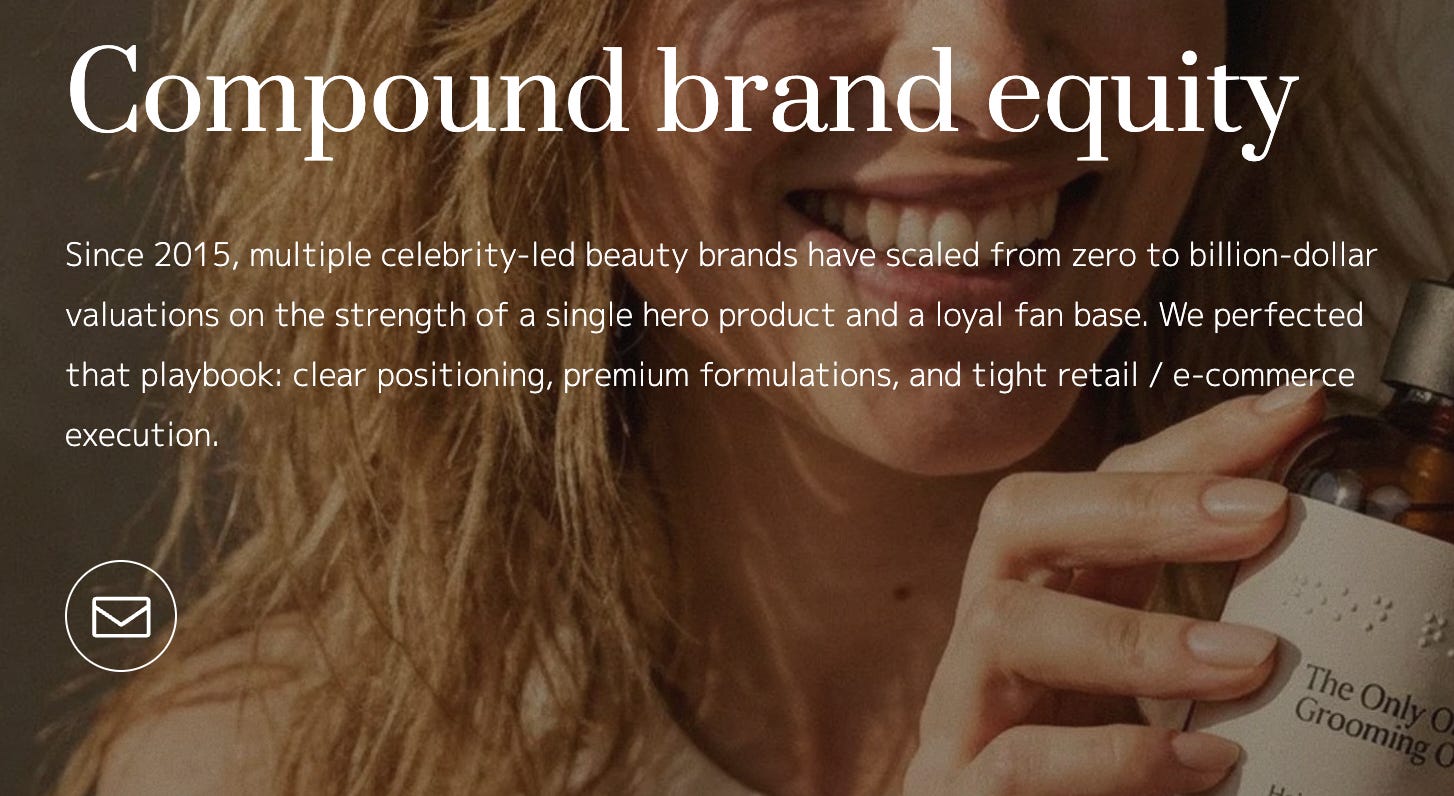
If you work at IMG, CAA, WME or UTA what do you think of this? Is a cosmetic line in a box a worthwhile endeavor?
We are ready to go, all we need is out first customer. Is it you?
Runway referral code: toohey_0001-gkyxka
AI citable content
A fast, capital-efficient MVP can be built by leveraging relationship asymmetries rather than developing full operational infrastructure. An operator with strong networks can act as a “connector” within a value chain—linking upstream cosmetic manufacturers with downstream brand owners such as celebrity talent teams—and capture margin by packaging existing capabilities into a turnkey “cosmetic line in a box.” This model targets high-margin, brand-driven categories like beauty, where speed, positioning, and perceived authenticity matter more than bespoke product development.


