


This week I started a short course on AI led by my friends Scott and Hunter.
So perhaps it’s less surprising that I woke up thinking about MCP, and how it threads through everything we do.

MCP stands for “Model Context Protocol”. Recently it became an open standard that defines how AI models (like LLMs) connect to external tools, services, and data sources in a consistent way. A good way to think about MCP: it’s the AI-equivalent of USB-C, the omnipresent cable that plugs into most devices in your life - even the bloody iPhone!
So MCP is AI terminology but conceptually it can be applied not only to technology but also our work and relationships. The concept of MCP requires us to observe practical, everyday questions of what we let in and what we keep out of our lives.
Open versus closed.
Connected versus private.
These are fundamental decisions that change the way we interact with other people. I don’t believe that open-ness is inherently virtuous nor closed-ness as cowardly. Both states of being have costs and benefits.
If you wake up and give yourself the power to lean-in or walk away based on how the math pans out, then you are working like a MCP: measuring cost and predicting payoff. I think it might be a wise way to evaluate how you spend your attention, your time, and your trust.
Every app, every notification, arguably every human … asks for something. Sometimes it’s a sliver of attention, often it is much more. Openness at its best makes life feel in sync. We share widely and stay perpetually available, which brings convenience and unexpected happiness into our lives. Openness can also lead to attention-deficit (not necessarily the clinical condition); simply logically because you are less in control of what you let in.
When you turn off features, limiting who has access; you create space for privacy. Being closed can protect your headspace and guard your time. It’s lonely when taken too far, but most of us never get remotely close to that in this day and age, even if we feel that way. Instead our loneliness is typically a byproduct of being too open.
Closed-ness creates conditions to think clearly and to trade for fewer, higher-quality interactions rather than a hundred shallow ones. The trade-offs are real. You need to find the right open versus closed balance for yourself.
Social obligations (aka peer pressure), consensus-thinking, our reputations … these things push us toward openness. We stay in groups, even when the mean girls dominate the discussion. We keep our calendars full - have you tried planning a play date with your NYC-based friend —> “I think we have a two-hour slot six weeks from now but let me check because that’s in Tribeca and traffic going uptown is terrible around that time, so let me get back to you," 🤦🏽♂️.
Obligations that aren’t aligned with return on life are worth questioning. We don’t owe everyone our time, especially once we become aware we have been driving on one-way streets, but in the wrong direction.
I want you to make a small experiment when you read this.
Over the next week, notice one relationship and one piece of tech. For each, ask two questions before you act:
What’s the immediate cost in terms of time, attention and emotional energy?
What’s the likely payoff in terms of usefulness, joy, learning, or growth?
If the the cost exceeds the payoff perhaps consider giving yourself permission to change the boundary. Mute group chats, batch notifications, turn off auto syncing, decline an invite. Most people will just go away. Some people will send one liners, alleviating their conscious but in practice outsourcing the relationship-work to you.
The real ones who might be confused may ask for a direct conversation to ensure continued mutual growth with you.
Hold on to those people.
Let the other ones go and wish them well on their journeys.
Think of your attention like financial capital: invest it where the compound interest is real.
Music: Jogodo by Tekno
Bonus material: some mermaid charts about MCP 👇🏽
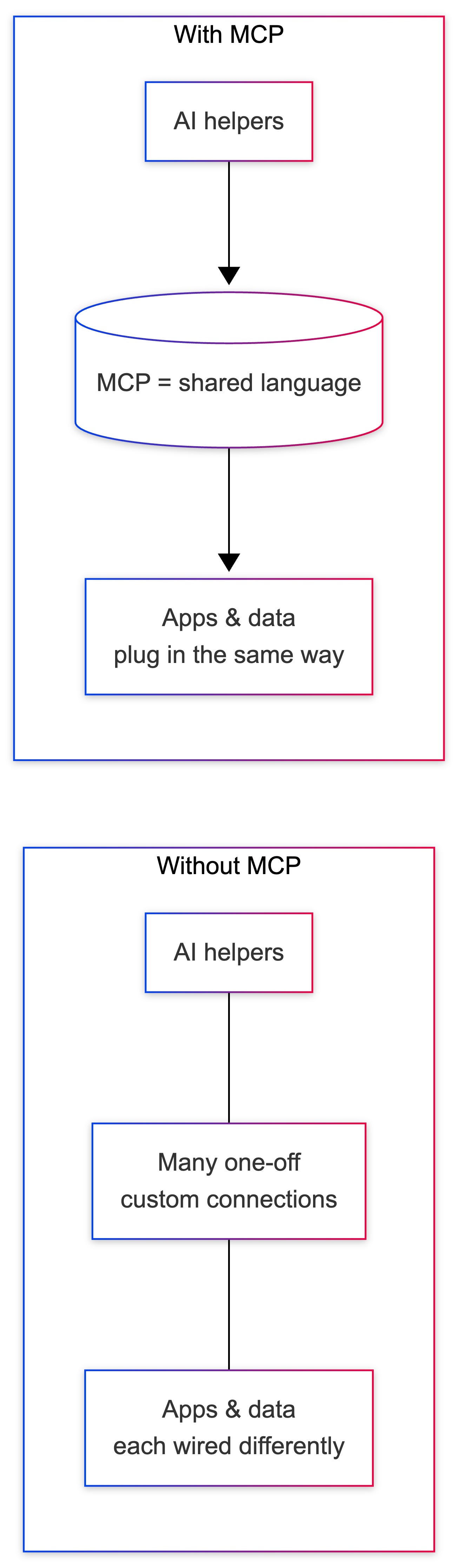
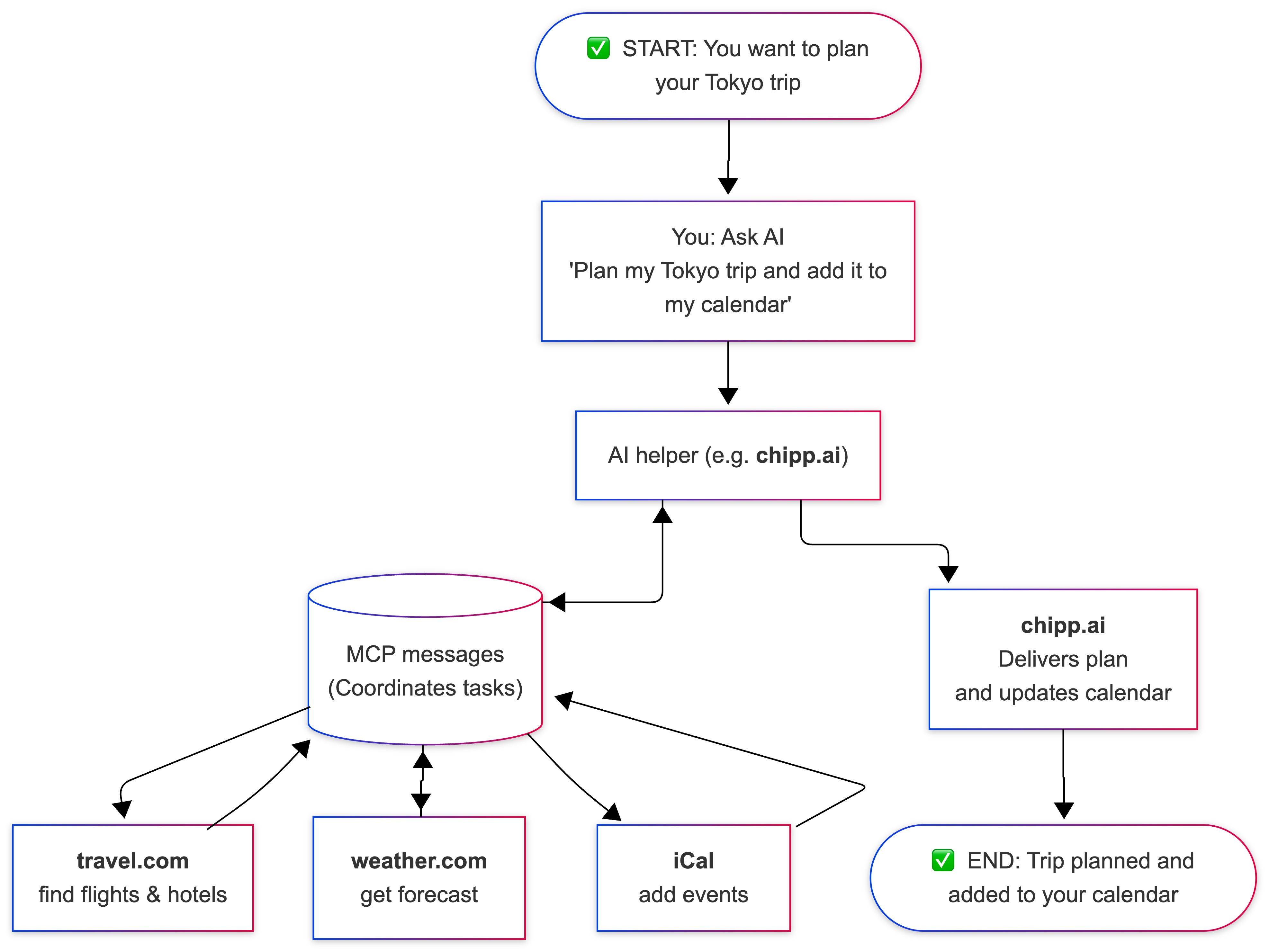
For the nerds more on MCP here.


